
10th Pécs African Studies Conference – April 29-30, 2026
AFRICAN, ASIAN, AMERICAN AND CENTRAL EUROPEAN VIEWS ABOUT
THE CHANGING WORLD ORDER AND INTERNATIONAL RELATIONS
| April 29, Wednesday |
09:30 – 10:00 Onsite registration (Vargha Damján Conference Hall, Faculty of Humanities and Social Sciences, University of Pécs, Ifjúság útja 6) and welcome coffee
10:00 – 10:30 Welcome addresses
|
10:30 – 11:15 Keynote lecture / Ian Taylor Memorial Lecture: Dr. Lina Benabdallah (USA), Between Solidarity and Geopolitical Rivalries: Making Sense of Africa–China Relations in a Shifting Global Order followed by a Q&A until 11:30 |
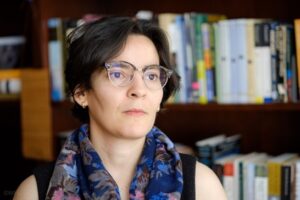 Lina Benabdallah is McCulloch Family Faculty Fellow and Associate Professor of Politics and International Affairs at Wake Forest University. She is the author of Shaping the Future of Power: Knowledge Production and Network-Building in China-Africa Relations (University of Michigan Press, 2020). Her research has appeared in International Studies Quarterly, International Studies Reviews, African Affairs, The Journal of International Relations and Development, Third World Quarterly, Ethics and International Affairs among others. In 2022, Dr. Benabdallah joined the team of editors of PS: Political Science and Politics as co-editor. In the 2025–2026 academic year, she is a visiting fellow at Harvard University’s Weatherhead Center.
In this moment of Global Order transition that we are witnessing, strategic narratives are ever more crucial to foreign policymaking. In this paper, I examine South-South Cooperation narratives with a focus on Africa-China relations. At a time when we are witnessing the increasing retreat of traditional powers from the international development scene and the emergence of even more players from within the Global South as serious partners in development, narratives of South-South cooperation are even more at the center of politics. However, parallel to these hyped narratives of solidarity are realities on the ground with countries such as China, India, and Brazil, and South Africa battling to keep their domestic economies afloat amidst global tariffs, trade barriers imposed by the US, and renewed scramble for energy sources. As the Late Professor Ian Taylor astutely questioned about a decade ago, in the middle of these seeming changes, are African states truly increasing their agency or merely diversifying their dependence. In this talk I, inspired by Professor Taylor’s work, I dig deeper into reflections about whether in today’s geopolitical moment South-South cooperation is truly a path of alterity for Global South states or is it indelibly caught in extractive and exploitative competition over resources and markets?
11:30 – 12:50 Panel 1 Chair: István Tarrósy (Hungary)
11:30 – 11:45 Zoltán Vörös (Hungary): A Contested World Order
11:45 – 12:00 Pamela Chemelil (Kenya): Humanitarianism in the Changing Global Order
12:00 – 12:15 Gergely Buda (Hungary): Geoeconomics of Instability: Recent Resource Exports and Coups in Africa
12:30 – 12:50 Q&A debate
12:50 – 13:30 buffet lunch
13:30 – 14:50 Panel 2 Chair: Lina Benabdallah (USA)
13:30 – 13:45 Tamás Dudlák (Hungary): Turkey’s Expanding Role in the Horn of Africa:
Strategic Cooperation with Ethiopia amid Middle Power Geopolitics
13:45 – 14:00 Fedor Zolotarev (Russia): Knitting Networks below Nation-State Level:
Russian City Diplomacy with African States
14:00 – 14:15 Belay Asmara Aragaw (Ethiopia): Russia–Ukraine Diplomatic Warfare in
Africa: Motives, Strategies, and African Responses
14:15 – 14:30 Viktor Marsai (Hungary): The role of external small state actors in African
peace and stability – the Hungarian example
14:30 – 14:50 Q&A debate
14:50 – 15:15 coffee break
15:15 – 17:00 Panel 3 Chair: Viktor Marsai (Hungary)
15:15 – 15:30 Sabine Planel (France): (Ethiopia's) civil war from below
15:30 – 15:45 Meressa Tsehaye Gebrewahd (Ethiopia): Factional politics in Tigray in
the context of the post-Tigray–Ethiopia war
15:45 – 16:00 Gebrehiwot Hailemariam (Ethiopia): The Quest for Sustainable Peace in
the adjacent communities of Tigray and Afar: Inter-Community Conflict Mapping and Analysis at
Grassroots Level
16:00 – 16:15 Neo Sithole (South Africa): A Cross Regional Comparison Early Agrarian
Populism in Russia and Guinea Bissau
16:15 – 16:30 Douaa Dridi (Tunisia): Inclusion by Exclusion at The Tunisian-European
Borderland: Crisis Narratives vs. Solidarity Narratives
16:30 – 17:00 Q&A debate
17:00 – 17:20 coffee break
17:20 – 18:30 Round-table discussion Moderator: Zoltán Vörös (Hungary)
Participants: Jeffrey Sommers (USA), Kwang-su Kim (South Korea), Ali Miganeh
Hadi (Djibouti), István Tarrósy (Hungary)
The evening cultural programme is part of the Africa Days/Afrika Napok of the International Seasons 2026 of the University of Pécs. Starting off at 19:30. This day is dedicated to Rwanda, and we will have a fashion show between 19:30 and 20:00, then, from 20:00 dance performances and a community dance session.
Organizer: Close to Africa Foundation
| April 30, Thursday |
09:00 – 10:40 Panel 4 Chair: Pamela Chemelil (Kenya)
09:00 – 09:20 Ali Miganeh Hadi (Djibouti): Impacts of Foreign Military Presence in
Djibouti on Regional Security and Port Infrastructure Development: A Multidisciplinary Analysis
09:20 – 09:40 Demeke Achiso (Ethiopia): The Landlocked Regional Power: Ethiopia's
Strategic Pursuit of Access to the Sea
09:40 – 10:00 Andrés de Castro (Portugal) & Laura Gogny (Spain): Beyond
Traditional Security Assistance: Measuring Impact of the GAR-SI Sahel Project (2017–2025)
10:00 – 10:20 Buyisile Ntaka (South Africa): Rebel legacies and post-conflict political
orders in Africa: Comparing the RPF and RENAMO
10:20 – 10:40 Q&A debate
10:40 – 11:00 coffee break
11:00 – 12:30 Panel 5 Chair: Dudlák Tamás (Hungary)
11:00 – 11:15 Kwang-su Kim (South Korea): Identity, Collective Memory, and Gen Z
Political Participation in Madagascar: Structural Inequality and the Demand for Regime Change
11:15 – 11:30 Emmanuel Frimpong Sarpong (Ghana): Rethinking soft power through
Ubuntu: South African Political Elites Discursively Construct China
11:30 – 11:45 Danilo Lorenzo Delos Santos (The Philippines): A Tale of Divergence:
Why the Belt and Road Initiative Won Kenya and Lost the Philippines
11:45 – 12:00 István Tarrósy (Hungary): African Views and Policies on Digital
Advancement and Cyber Security – Focus on Chinese Engagements
12:00 – 12:30 Q&A debate
12:30 Closing of the conference
12:45 – 13:30 buffet lunch